
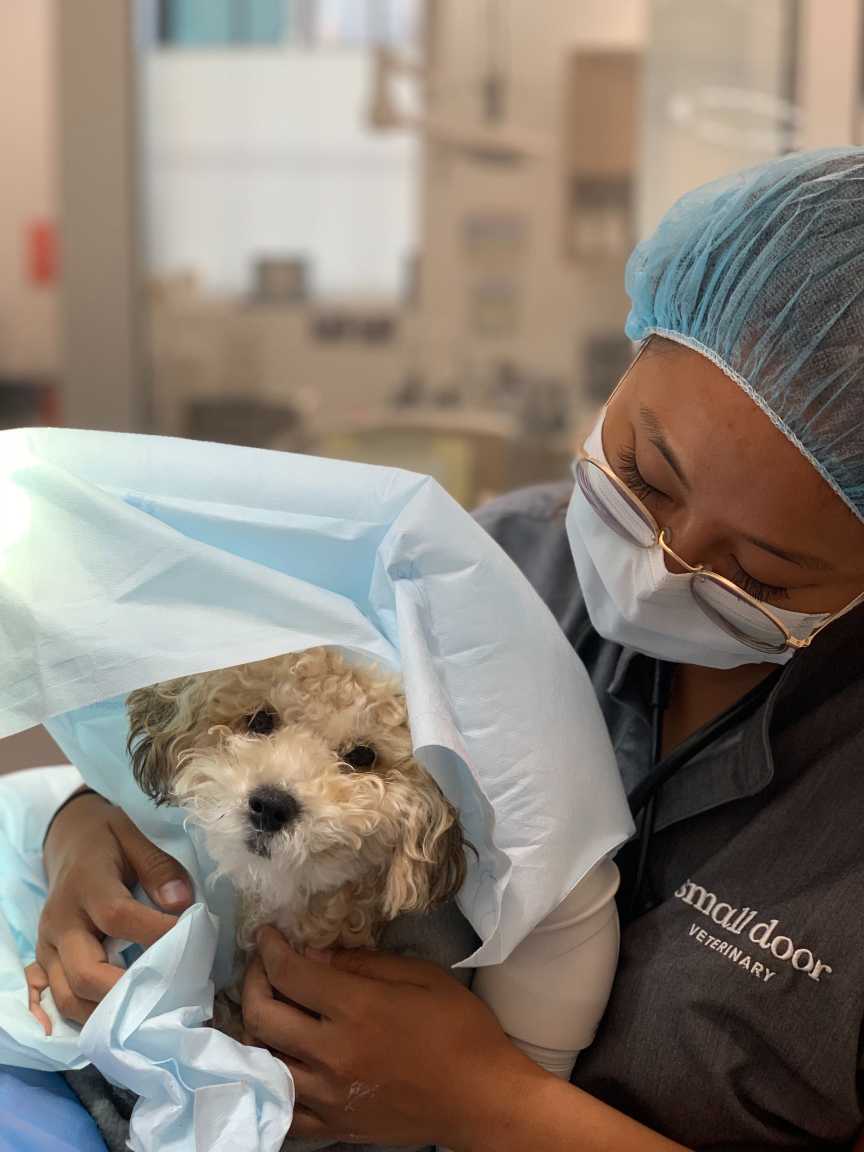
Why do we spay and neuter?
Overpopulation is a large problem, with millions of unwanted pets still in shelters, and millions of healthy pets having to be euthanized every year. Spaying and neutering have been statistically proven to decrease the number of homeless pets.
Spaying and neutering also have a number of health and behavioral benefits for your cat or dog. Spaying at a young age has been shown to reduce the occurrence of mammary (breast) cancer and uterine infections (also known as pyometra). It also eliminates heat cycles (menstruation) which can be messy and/or painful for your pet.
Neutering prevents testicular cancer and may prevent some prostate diseases, and both spaying and neutering may also help prevent or alter unwanted behaviors, such as aggression, urine marking and ‘roaming’ (where pets wander off in search of a mate).
When is the best time to spay or neuter?
Most dog spays and neuters are performed between 6 and 9 months of age. For large breed dogs, it may be worth waiting until they’re a little older to take full advantage of their growth hormones and allow their bones to mature.
For cats, both spays and neuters should typically be carried out around 6 months of age.
If you have an older cat or dog who is not spayed/neutered, they can certainly still be spayed/neutered. We’ll discuss all of your options at your first wellness visit, and advise on the best time for your pet.
Most dog spays and neuters are performed between 6 and 9 months of age. For large breed dogs, it may be worth waiting until they’re a little older.
What to expect
Before your cat or dog is spayed or neutered, we’ll see your pet for a pre-operative appointment to discuss the procedure and check your pet’s health. This will include a physical exam plus some blood work to make sure your pet is healthy for surgery.
The night before your pet’s surgery, you’ll need to withhold food from midnight onwards, but you can keep providing water. Make sure everyone in your household is aware, so no-one accidentally gives them breakfast!
You’ll drop your pet off with us in the morning and leave them at the hospital until the procedure is complete and they’ve recovered from the anesthesia. We’ll send you regular updates and photos or videos of your pet throughout the day to let you know how they’re doing. You’ll then be able to pick them up later on the same day, unless there are any complications.
Post spay or neuter care
Most cats and dogs recover relatively quickly. A little wooziness and some post-anesthesia anxiety or fussiness is normal. Young pets may want to play again the same day, but they should be kept calm for 10-14 days to help them recover. This means restricting play and exercise; dogs should only take short walks for potty breaks.
It’s useful to restrict your pet to a quiet room or area where they cannot run or jump. Crating can be helpful for dogs, and make sure your pet’s bedding is clean and dry to prevent the risk of infection. Cats should have a clean litter tray nearby, and you should remove any toys that encourage boisterous play. Chew toys and food puzzle toys can be helpful.
We’ll send your pet home with pain medication to keep them comfortable, and an E-collar (an Elizabethan collar) to prevent them from licking, chewing, or irritating the surgery site.
We’ll schedule a complimentary post-op exam around 10-14 days after your pet’s spay/neuter so we can check they’re healing well and remove their stitches if needed.
Stem cell collection and storage for dogs
During your dog’s spay or neuter, you may wish to have their stem cells collected for future therapeutic use. Stem cells are a special type of cell that are able to turn into other types of healthy cells – in humans, stem cells are found in bone marrow and umbilical cord blood. Stem cell treatment uses cells from your pet’s own body to aid healing.
While still in the early stages of research, stem cell treatment for dogs has shown many promising uses; currently, it can help to treat osteoarthritis and atopic dermatitis (a type of allergy), and in the future, there will hopefully be many other applications.
Your dog’s spay/neuter provides a one-time opportunity to obtain stem cells without a special, separate procedure. Instead of discarding the reproductive tract during routine spay/neuter, we specially prepare the tissue and send it for storage. We work in partnership with Gallant, who extract the stem cells from the tissue, expand, and store them for as long as you choose. If and when it’s determined that stem cell therapy could help your dog, we can order stem cell infusions from Gallant to begin treatment.
If you’re interested in this optional addition to your dog’s spay/neuter, please reach out to us for further details.